Just ask. Get answers.

[contact-form-7 404 "Not Found"]
  • Our Work
  • Logo Gallery
  • About us
  • You’re in Good Hands
  • Services
  • Our Blog
  • Contact Us
Let`s Create

All posts tagged: Logo

Welcome to our blogs. Have a read through and let us know what you think.

Branding Small Businesses

Branding small businesses can be challenging, why? because most brands are associated with larger companies such as Apple, Nike, Coke, Mercedes Benz, just to name a few. But what is branding?

Branding is ‘the marketing practice of creating a name, symbol or design that identifies and differentiates a product from other products.’ It’s what consumers think of your product / image / company.

Branding is how you want your audience and everyone else to view your company. Branding is what your audience can expect from your services or products.

But how do you create a brand?

Step 1. Define your brand

Before you create your brand you must first define it. Work to define the following to focus your brand:

  • Company mission statement.
  • Characteristics of your company.
  • What are our company goals?
  • Characteristics you would like your company to have.
  • Who is our target audience?
  • Mercedes

Step 2. Create a identity through logos and colour

COLOR:

Colour schemes may not seem like a urgent important decision for your brand; but let me assure you that it is. The human mind is extremely responsive to visual stimuli. However, colours play a major contributor in this response, which you may or may not have known.

Each colour can affect your brand differently, there are underlying messages behind each one. The tone and shade of your colours will affect your brand.

Meanings associated with differing colours:

  • Red: Passion, Power
  • Blue: Loyal, Clean, Trust, Peace
  • Pink: Love, Tranquil, Feminine
  • Orange: Energy, Warmth, Excitement, Health
  • Green: Soothing, Money, Nature
  • Purple: Creativity, Royalty, Magic
  • White: Simplicity, Purity, Cleanliness,
  • Black: Power, Sophistication
  • Brown: Outdoors, Masculine, Rural

Starbucks Brand Colours

YOUR LOGO

You need to take your time when creating your logo, with a professional graphic design agency. Your businesses logo is a crucial piece in creating an effective brand in the market place. Think of your logo as your businesses face. Your logo is what your customers will learn to associate with your business and its services or products.

When creating your logo, think for the long term. A good question to ask yourself is ‘what logo would I like to see my business still have in many years to come?’

How you are going to use your logo? On websites, billboards, stationary, vehicles etc? You want to create a logo that is adaptable to each and every possible way.

Step 3. Create a slogan

Just Do It Slogan

What is a slogan? A slogan is a unique phrase that links your name to your brand.

Slogans are tricky to come up with and more work that one might think. But, don’t get so focused on creating the perfect slogan that you just can’t think or enjoy the process!

Instead, focus on what your product or service is that your brand represents, focus instead on the benefits of your services or products. This is what your slogan should ‘say’ to your audience.

Examples of famous slogans:

  • Nike: “Just do it.”
  • Coke:“The Real Thing”
  • LG: “Life’s Good”
  • Apple: “Think Different”
  • Lego: “Play on”
  • Disneyland: “The happiest place on earth.”

Step 4. Integrate your ‘Brand’

Converse Shoes Brand

Your brand is now ready to be implemented into every aspect of your business. Small businesses have a leg up in this area, because with fewer employees comes the opportunity of being more personal with your customers.

You need proper training with your staff that ensures that everyone is on the same page with your brand. Why is this so important? I will explain using an example of a cleaning services business. If the business is trying to portray their brand as being ‘clean’ and ‘professional’, then the employee who is wearing a dirty uniform will confuse your customers.  This is where proper training of your employees will considerably help with any of these issues.

Step 5. Be Authentic and Consistent 

Last and importantly, make sure every communication you send out in regards to your business is consistent and in line with the brand you have created. A confusing brand will deter rather than attract your customers. This is usually done by asking your graphic design agency to create a style guide.

Conclusion

Branding is essential in creating a successful small business. Follow these steps to create a brand that develops the essence of your business and (hopefully) reap the rewards that come along with it. Stick with it. It pays off.

June 15, 2016 admin Branding Comments Off on Branding Small Businesses

Develop an effective brand

Branding is being embraced by small businesses as a means to distinguish themselves from their competition. It takes time to develop an effective brand, both in the creation and the implementation stage. A brand is not created overnight; it is planned, maintained, groomed. Done effectively, the process is well worth your energy.

To explain what a brand is simple, it’s the public image of a business or product. It is a promise. It is reputation. When delivered consistently, a brand shapes consumers’ perceptions and their expectations. A successful brand celebrates personality, values and embodies the spirit of the subject it represents.

The objective of a branding strategy is to develop a clear, compelling and consistent message that is easily conveyed. A good brand contains messages that can speak to a large audience, including it’s current customers, and potential people. This has to be delivered in a short, simple way.

Creating a Logo

Apple-Retro-Logo

A crucial part of developing a branding is the creation of a good logo, but remember your logo is not your brand. This visual element symbolises the brand, plays a large role in establishing the emotional connection with the product. Integrating the logo into all corporate elements, including PR, information packets, brochures, advertising, videos, newsletters, websites and social media, is a important part of building the brand identity. Consistency in design, look is vital in building credibility.

A important rule for logo design is that it must be able to speak on it’s own. Effective logos should not have to be explained. Take a look at some of the world’s most successful brands: the Nike swoosh, the golden arches of McDonalds, the interlocking rings of the Olympics, the colorful peacock of NBC and the bite out of Apple. Brands & a strong visual identity helps this happen.

Investigating a Brand Identity

Branding Identity Logo Design Explained

It is easy to hire a graphic design agency and writer to assist in the creation of your brand. Significant time, money and energy will be lost if a well thought out plan isn’t planned first. The first place to start is with a SWOT analysis. When evaluating your Strengths, Weaknesses, Opportunities and Threats to your company, it is important to be honest.

A thorough review of your business should include what it will accomplish, how the products and services will be delivered, why it even exists and what it makes it different from your competitors. Also consider the target audience, what their concerns are, and how the business can help them. Be careful not to quickly reject an idea as ridiculous during this brainstorming phase.

When the list is at a point where it can be narrowed down to the three best ideas, a focus group should be put together to gauge their perceptions, reactions, misconceptions, feelings and opinions. A another focus group of staff and members, as well as current customers, should also be gathered.

Building a Branding Strategy

Questioning Attitude

Negative feedback about products and services should be considered when developing the branding strategy. Make a list of the current public perceptions, then take a critical look at how those beliefs can be repositioned.

At the very least, the focus groups opinions should drive the final branding position statement. Around one to two paragraphs, this statement must embody who the company is and what it delivers differently. From these sentences, sound bites that can be incorporated any time someone speaks or writes about the business.

Once this is done, visual and textual elements can begin the development stage. These should reflect the personality and values of your brand, but also match the interest of your target audience. For example, if a skateboard company wants to attract a young and hip audience, the messages, fonts and artwork should be playful and outdoorsy. In complete contrast, a retirement house needs to build a more subdued brand in order to portray an image of trust and peace.

Utilising a Slogan

M&Ms-Melt-Hand

A slogan should be developed to define the business to its audience. When a customer hear a slogan, they should immediately think of its associated company. For example, when someone says, “Just do it,” the first thought is Nike. Other large corporations have been extremely successful with these tactics, including M&M’s “It melts in your mouth, not in your hands”.

The objective is to keep the slogan simple and easy to remember. Being clever is only considered if it doesn’t confuse the message. It also has to be short since the slogan is typically incorporated into the logo design, as well as all collateral marketing pieces.

As the brand is implemented, it is important that everyone affiliated with the business is able to convey the brand messages. Each person who represents the company is a brand ambassador, from the CEO, to the sales manager, to the receptionist, to the staff.


May 23, 2016 admin Brand Identity, Branding, Branding Adelaide Comments Off on Develop an effective brand

To design a logo

Want to know how to design a logo like a professional? Well that takes years to master. This is why you seek a professional design agency in Adelaide such as Designlab.

However I can guide you to an easy and quick breakthrough of how we approach a logo.

First of all learn what a logo is & what it represents

Logo Design

Before you can design a logo, you must understand what a logo is, what does it represent and what is it supposed to do. A logo is not just a mark – a logo reflects a business’s brand by the use of shapes, fonts, colour, and images.

A logo inspires trust, admiration and recognition for a company and it’s our goal as a graphic designer to create a logo that meet its objective.

One must know what a logo is before continuing.

Read about what is a logo check out Wikipedia’s.

Understand The Principles of Effective Logo Design

Effective Logo Design

Now that you know what a logo is, and what it represents you must learn about what makes a great logo; the basic rules and principles of an effective logo design.

1. A logo must be simple

A logo must be simple, it’s design allows for instant recognition and the logo should be versatile & memorable. A good logo features something unexpected without being overdrawn.

2. A logo must be timeless

An effective logo should stand the test of time. Will the logo still be effective in 10, 20, 50 years? A good one does.

3. A logo must be memorable

An logo design should be memorable and this is achieved by having a simple, yet, appropriate logo.

4. A logo must be appropriate

How you position the logo should be appropriate for its business. For example, if you are designing a a logo for restaurant, it would be appropriate to use a classy font & colour scheme.

5. A logo must be versatile

An effective logo needs to work across a variety of applications and mediums.  Logos should be designed in vector format, this ensures they can be scaled to any size. The logo must also work in just one colour, as well as colour.

Learn Off Others Success & Mistakes

Logo Success

Successful Logos

Now that you know the basic rules of good logo design, you can distinguish the differences between a good and a bad logo… By researching why other logos have succeeded, and why they have succeeded can give you a great insight into what makes a great logo.

A great example, is the famous Nike Swoosh. The logo was created by Caroline Davidson in 1971 for only $35 yet it’s still a strong, memorable logo and effective without colour. It’s simple and fast and represents the wing in the famous statue of the Greek Goddess of victory, Nike – something which is perfect for a sporting apparel giant. Nike is just one of many successful logos, think about other famous logos that you know about and check out their logos – what do you think makes them successful?

Check out Logo Of The Day, it has some successful and not so successful logos, worth a look.

Not So Successful Logos

We can also learn off logos that are not successful (look above in the picture or view these bad logo designs. Some logos can depict things that may have not always been noticeable to a designer or they are simply just bad design.

Establish the Logo Design Process

Design Process

Now that you know what a logo is, what it’s principles and rules of logo design are, and what makes a logo successful we can finally begin designing. This is the hardest part and is its own topic in itself – Each designer’s logo design process is very different however check out The Secret Logo Design Process Of Top Logo Designers for a guide.

A logo design process usually consists of the following:

  1. A Good and Clear Design Brief
  2. Research & Brainstorming
  3. Sketching on Paper
  4. Prototyping & Conceptualising
  5. Send To Client For Feedback
  6. Revise & Add Finishing Touches
  7. Supply Final Files To Client
  8. Give Fantastic Customer Service

Learn The Software & Complete The Logo

Design Software

After you have got your design ideas planned, it is usually a good time to begin learning your software (Adobe Creative Suite is the industry standard) but remember you can’t design a logo by just hopping straight onto the computer… brainstorm first!

After you have your initial sketches you can then usually jump onto a computer to start drawing your logo. After you have got a great concept you can send it to your client, get feedback, and (eventually) finish the logo.

If you require a quote or just want to chat to someone from our team contact Spiros on 0431 926 575.

May 11, 2016 admin Graphic design, Graphic Design Adelaide, Logo design Comments Off on To design a logo

Why a professional logo design doesn't cost $99

Professional Logo design today is totally under rated. People do not understand how important a good logo is and how valuable it is to their business. We are going to outline some very important points explaining to you exactly why logo design should not cost $99, and why your logo is not something you should ever take lightly.

We will do this by comparing “cheap logo design” to “professional logo design” and we will outline the reasons why professional logo designers don’t charge low fees and why you should invest in a professional logo design.

What Is A Logo?

To really understand what a logo must achieve, we first must know what a logo is. A logo’s design is for immediate brand recognition, it inspires trust, admiration and loyalty. A logo is one aspect of a businesses brand, or economic entity, its colours, shapes and fonts usually are different from others in a similar market. Logos are also used to identify business.

It makes us so frustrated as to why some people have no logo, or why they would even bother with a getting a cheap logo designed if a logo is meant to do all of these things.

Spec Work

No Respect

Before we get into comparing cheap vs professional logo design I want to talk to you a bit about SPEC work. “Spec” has become the short form for any work done on a speculative basis.

For example. If you design this for me, I will pay you if I like it. – This is clealry not right.

To explain, let’s create a scene in another industry where SPEC work does NOT exist.

“I went for a dental check-up the other day. After the dentist finished, he suggested I need some work to prevent further tooth decay. I told him to go ahead, and if the dental work to my satisfaction, I’d be more than happy to pay. He responded that he wouldn’t be able to do that, because he normally provides a service when a fee is agreed upon up-front. I said I’d let him know after I checked in with other local dentists.”

This sort of thing happens in the design industry every day and is ruining the design industry. A designer should not have to invest time and resources with no guarantee of payment much like a dentist or any other professional.

Check out these comics below about Spec Work, they are very amusing.

  • Freelance Freedom 1
  • Freelance Freedom Comic 2
  • Freelance Freedom Comic 3

Cheap Logo Design

What quality can you expect for a logo in between the $5 – $200 price bracket. Have a look at the following link $35 logo design contest that was held on Digital Point Forums.

The “brief” for the logo design was

“MAKE A LOGO FOR THE SITE ‘SPELA PIANO’. THE MEANING OF THAT IS PLAY PIANO. THIS IS A SITE WHERE OUR MEMBERS CAN LEARN TO PLAY PIANO ONLINE.”

Below you can see the concepts from the contestants, which one do you think won?

$2.50

You will notice that nearly all of the logos above use free standard issue fonts and don’t assign to the rules of what makes a good logo. Ie. memorable, effective, describable and scalable.

Ask yourself the following questions to the contest logos above:

  • How many of the logos can you describe or remember?
  • Do you think these logos are effective without colour?
  • Are they scalable enough?
  • Do they gain immediate recognition of what they are?
  • Do they convey the company’s character or personality?
  • Do they relate to your clients by conveying a feeling of credibility?
  • Do they have association with quality?

Professional Logo Design

Professional Logo Design

Now compare these professional logo designs and answer the same questions as above….

Can you any difference?

Why are they so different? Because professional logo designers have a process that involves research and conceptualising and this is why they do not charge $99.

The design process of a professional logo designer usually consists of:

  1. A Design Brief: This is a questionnaire and interview with the client to create a design brief.
  2. Research: Conduct research focused on the market itself, on its history, and its competitors.
  3. Conceptualising: Develop logo concept(s) around the brief and the research.
  4. Reflection: Taking breaks throughout their design process. This lets ideas mature and get them renewed enthusiasm and get feedback.
  5. Presentation: Choose whether to present only a select few logos to the client.

Do you believe doing all of that costs $99?

On that note, did you know that the software used to make the logo is around $2,000 in itself,  let alone the computer or the costs associated with essentials… i.e. paper, ink and an internet.

More Reasons

Here are some more responses from other designers on reasons why logo design does not cost $99.

  1. A logo is the first impression your customers get of your business.
  2. A logo needs longevity, it should stand the test of time.
  3. A logo needs to be original (not a copy from somewhere else).
  4. A logo should look professional.
  5. A logo should reflect the business.
  6. A logo is the starting point of your corporate image.

Now look back at those $99 logo designs to see they follow the above points.

How much does a logo cost?

This is the most frequently asked question, and as we say to all our clients it is the hardest one to answer without more details of the project.

The cost of a professional logo design is a question that cannot be easily answered as every company has different needs, the best way to approach this question is to draw up a customised quote for each individual. This is how we approach it at DesignLab.

A number of facts have to be taken into consideration when designing a logo, i.e. how many logo concepts, how many changes are required, how much research is needed, the size of the business, does the business need corporate stationery (such as business card or letterhead design).

The best way to find out how much a logo design will cost is to get a quote from the design agency.

Is Time To Invest?

Isn’t it about time you invested in a professional logo design?

You can can get a free quote by calling Spiros on 0431 926 575 or email us at info@designlab.net.au


April 4, 2016 admin Graphic Design Adelaide, Logo design Comments Off on Why a professional logo design doesn't cost $99

Rebranding Sydney Opera House

Sydney Opera House’s new rebranding will attempt to solve a problem unique to the architecture.

Since it’s construction was completed back in 1973, the Sydney Opera House has become one of the world’s most iconic buildings. Over 7 million people a year take a photo in front of the building, but only a small fraction of those people actually walk through the doors for a tour. although the Sydney Opera House is a popular arts destination, with over 1 million tourists a year, it doesn’t have much of an identity that it can call its own, independent of the building’s facade.

The Sydney Opera House was meant to be seen as one with its exterior; you supposed to want to go in as much as you wanted to walk around it. Now, Interbrand Australia has created a new identity for the Sydney Opera House that the CEO Cooney hopes will finally succeed in integrating the organisation’s iconic exterior with the vibrant arts.

Inspired by geometry and shadow of the building’s exterior, Interbrand’s new logo encompasses a custom typeface to accompany its old logo (an abstract, geometric representation of the Opera House), as well as a visual language that references the building’s iconic architecture. “At the heart of it, we wanted to help the Sydney Opera House reassert its purpose,”.”To be a source of inspiration within a building, not just a building.” says Cooney.

It’s a problem unique to the architecture, of which the Sydney Opera House designed by Danish architect Jørn Utzon in 1957. Everyone wants an famous building. But what happens when your building is just too famous? How do you refocus attention when the building is viewed as more important than the cultural institution it was designed to promote?

Interbrand’s approach was simple, Cooney said it’s important to understand the history of the Sydney Opera House. It was commissioned at a time when Australia, regarded as a colony, had just stepped onto the world stage as one of the Allied victors of World War II. “Up until then, people had very simple ideas about what Australia was.”. “But Joseph Cahill, the premier of New South Wales, understood that not only is public infrastructure important to the building of a nation, but so was building an infrastructure of the arts. So he put out the task to make an arts center.” This arts center, became the Sydney Opera House. “The project was a crucial part of Australia working out who we wanted to be, and how the world saw us.”

In other words, the Sydney Opera House original purpose was to shift perspectives. Shifting perspectives is also the goal (and even the name!) of the Sydney Opera House’s new identity. “We looked to the structure’s details for inspiration.” “Most of the shapes we use are inspired by the building itself, which is both beautiful in its magnitude, and beautiful in miniature.” Cooney says.

The new identity includes a new custom designed typeface named Utzon. Designed by Swiss typographer Laurenz Brunner, Utzon’s letters are beveled so that any given glyph is made up of multiple slopes and angles. When animated with a light source, these bevels create dramatic shadow patterns, which evoke the Sydney Opera House when it’s at sundown. And these letters don’t just exist as vectors: they have been designed to be real-world objects, so that they can be used as physical signage, and illuminated by real light sources.

Another element of the identity are the colourful new sails used to tie together the posters, commercials, and other materials. The sails are the subtle chevron pattern of the Sydney Opera House’s exterior, but unlike Utzon’s shells, they aren’t just monochromatic: They also are vibrantly coloured with shades plucked from the famous tapestries which hang on the inside of the building. It’s another example of how Interbrand Australia is trying to unite what goes on inside the Sydney Opera House. The sails look great in static form (for example, as the background pattern on a poster for an upcoming program), but like everything about the new identity, also lend themselves to motion. “When you walk around the building, it feels like it moves,” explains Cooney. “We wanted our work to have the same effect.”

It’s a little too early to tell if the Opera house’s new identity will help improve the attendance: It only started rolling out last December in 2015. But Interbrand Australia has succeeded in what it set out to do: The new identity looks native to the place. When Utzon sat down at his desk to draft the original design of the Sydney Opera House, he didn’t simultaneously create an integrated brand identity for the organisation his arts centre would house. But now, thanks to Interbrand Australia, it looks like he did.

All Images: courtesy Interbrand Australia

March 4, 2016 admin Blogs, Brand Identity, Branding, Graphic design Comments Off on Rebranding Sydney Opera House

Should you trademark Or copyright a Logo?

copyright-trademark-logo

Does a Company Need to Copyright a Logo?

We get this question all the time from our clients, and it’s one we often find difficult to answer.We get this question all the time from our clients, and it’s one we often find difficult to answer. Should you trademark or copyright a logo?

Copyright and trademarks are used to protect the owner’s intellectual property against infringement (copied). Copyrights usually apply to written films, work, music and computer files. Trademarks consist of symbols, words, phrases or a combination of the three that represents a company on signs, documents and marketing materials. Because logos include original artwork, a company may wish to get both a copyright and trademark to protect itself from another company using the brand recognition for its own benefit.

Does a Company Need to Trademark a Logo?

A companies logo is among the most valuable asset a business can possess. A logo helps customers recognise and identify the company and distinguish it from other competitors. A logo is one of the most common forms a trademark takes. Companies do not need to trademark their logo; simply just by using the logo in commerce, the company already has a trademark.

Logos often contain pictorial or a graphic element, this means the mark may be eligible for protection as both a trademark and copyright if it is an original work of authorship or otherwise meets the copyright requirements. Whether the company needs to register the mark or also seek protection as a copyright depends on many factors. Businesses should seek the advice and counsel of an attorney before proceeding.

How to Find Out if a Logo Is Copyrighted?

Two intellectual property terms dictate the indication of the ownership of a logo. These terms are names “copyright” and “trademark.” The designer of the logo automatically owns the copyright to the logo created, unless the designer has sold the copyright. A trademarked logo is a logo used as an identifying mark for a company. The best practice regarding the use of any logo is to avoid using it until you have determined the logo’s availability.

Look for an identifying mark or name on the logo. If an image or design for a logo is copyrighted but not trademarked, it may contain a phrase that contains the word “copyright” followed by the year of copyright and the name of the copyright holder. It may also include a copyright symbol © and date of copyright followed by the name of the copyright holder.

Look for a registered trademark ® to determine whether the logo is trademarked. While the images used in a logo may be copyrighted by a designer, most companies register a logo as a trademark rather than copyright. In most cases, you will be looking for a trademark ownership and not a copyright one, for example with McDonald’s and it’s golden arches logo. The name of the company that owns the trademark for a logo will be included with the registered trademark symbol.

Here is some more information about copyright and trademark for a logo
http://www.ipaustralia.gov.au/understanding-intellectual-property/ip-for-business/design-a-logo-and-brand/

February 15, 2016 admin Graphic design, Logo design Comments Off on Should you trademark Or copyright a Logo?

Graphic Design Trends To Be Aware of In 2016

Graphic Design Trends are influenced by culture and media, past and present, technology and fashion.

Madeleine Morley from The American Institute for Graphic Arts (AIGA) says this:

“A trend never simply emerges for a single year and then disappears in a puff of smoke. Instead, an aesthetic becomes popular gradually, even mysteriously, over time before fizzling out slowly without much notice at all.”

The design trends we will be covering didn’t magically materialise at the end of 2015; trends take time, and you’ve likely seen many of them in one form or another during the last couple years.

But even if you’re not one to follow trends, as a designer it’s sensible to be aware of the shifts going on in the industry—if only to perhaps avoid them before they become overused, or just to have the opportunity to tweak them into something new.

While forecasting trends with any certainty is a tricky business, many members of the graphic design industry seem to have developed a consensus as to what styles and approaches are most likely to take off for 2016.

“Modern Retro Style

As opposed to vintage or “old” retro—styles that draw from the early 1900s through the 60s—“modern” retro takes its influences from more recent decades, the late 1970s through the 90s. Think early PCs and video games, pixel art, and space themes: nerdy is now the new cool.

This illustration and t-shirt design by Ralph Cifra has all kinds of nostalgia happening. The technology theme also ties in nicely with modern-retro influences.

1
Ralph Cifra

This has a retro yet contemporary feel, complete with vinyl records and a solar system, we just love it.

2
From The Welcome Branding Group

80s style for a stationery brand

3
From Write Sketch & Officemilano
Screen Shot 2016-01-15 at 2.25.14 PM

Some limited “pixel edition” packaging designed for Coke. It features space invaders from the arcade video game of the same name released in 1978. Pretty cool.

Screen Shot 2016-01-15 at 2.30.14 PM
From Erin L. M. McGuire

Material Design

6
via Google

Google made quite a noise in the design world when it introduced its material design guidelines. This visual language is characterised by “deliberate color choices, edge-to-edge imagery, large-scale typography, and intentional white space” for a bold and graphic look.

Some designers are referring to material design as “Flat 2.0” because it’s an update to the flat design trend, adding light/shadow, depth, and movement for a more tactile sense of realism.

Though Google created it for web and mobile, you’ll see material design principles popping up in all kinds of design now.

This fluid website concept incorporates material design principles, including bold colors, large typography, and light and shadow effects. Card- or tile-based layouts (see the menu elements to the left of this image) are also part of material design.

Screen Shot 2016-01-15 at 2.33.59 PM
From Balraj Chana

Flat 2.0 illustrations for a weather app from Disky Chairiandy that integrates light and shadow for a sense of depth. Simple, but effective.

8
From Disky Chairiandy

Another website, designed by Al Rayhan, that features contrasting, bright colors but with a more traditional design—a good compromise between conservative and trendy.

9
From Al Rayhan

If you want to try out one material design’s vivid colour scheme, look out Material Palette. It’s a colour scheme generator that can help you quickly and easily choose a versatile selection of hues. Go on, give it a go!

Bright & Bold Colors

Fitting in with both 80’s/90’s styles and material design, vibrant hues should continue to prove popular into 2016.

This trend would be a move away from the more muted, 1960s-inspired palettes to favour bright, neons, pastels and richer, more saturated colors.Pantone’s Spring 2016 Color Report falls in line with this prediction for 2016.

Screen Shot 2016-01-15 at 2.39.28 PM
Pantone’s Spring 2016 Color Report

Neon shade of green combined with a golden yellow really makes this poster pop out. It was designed by In the Pool. Very cool and trendy.

11
From In the Pool

Here, some bright pastel gradients over the imagery in his landing web page design, it really makes the text stand out.

connection-fullres
From Michael Fangman

A clearly 80’s-inspired design from Tron Burgundy with electric colours and geometric shapes.

Screen Shot 2016-01-15 at 3.30.10 PM
From Ton Burgundy

Geometric Shapes

Geometric shapes and patterns are align with some of the 80’s trends we’ve already looked at. This one can be applied in all sorts of ways—as individual graphic elements, as backgrounds, as an illustrative technique.

Keep an eye out for a style known as “low poly,” which got its start as a 3D modelling technique for video games.

14
From Vivek Venkatraman

There are lots of helpful tutorials for creating a low-poly effect, either from scratch or taking a shortcut with a tool like this. Or just pick up a selection of free low-poly textures to try out the trend the easy way.

Another take on geometric shapes with shapes layered forming a colourful backdrop for some business cards.

Screen Shot 2016-01-15 at 2.48.28 PM
From Tank Design
Coloured triangles on this chocolate packaging create an eye-catching background:
Screen Shot 2016-01-15 at 2.50.19 PM
From Bag of Bees

Simple circular and rectangular shapes combine to form a versatile visual theme:

18
From Simeon

Negative Space

Negative space is an essential part of any logo design. We love it. Negative space can be a clever way to add deeper or double meaning to your designs. It can simply help give your composition a more minimal look.

In this design for a restaurant called “The Swan & Mallard,” has creatively managed to fit a swan, a mallard duck, and an ampersand all into one logo though positive and negative space.

19
From John Randall

In a different way, the negative space in this logo has movement and context to the word being spelled out:

20
From Sameer Ahmed

Have a look closely at the shapes created by the violin. They form a series of numbers 1, 2, and 3—which are part of the event name. How clever!

Screen Shot 2016-01-15 at 2.56.48 PM
Sam Hadley


Modular Layouts

Modular layouts have been adopted by some of the largest brands for their websites.

It’s the self-contained modules or cards used as the primary organisational principle that has created the twist of a new trend.

24

From Balraj Chana

Layouts don’t have to follow a grid where everything is aligned. They can be a little more freeform and still serve as an organisational tool. For example, this design below.

25
From Natalie Armendariz

Typography

Typography isn’t just for reading—it’s for making a statement. Look out for big, bold type that’s the center of attention. You can create drama, fear, love through size, but also through colour and texture.

Look at this handcrafted a series of letters to create the cover art for a magazine.

Screen Shot 2016-01-15 at 3.09.30 PM
SNASK
Screen Shot 2016-01-15 at 3.09.52 PM
From SNASK
29
From Brendan Prince

This much more minimalistic freeform approach depends largely on colour and shape.

Screen Shot 2016-01-15 at 3.12.05 PM
From Ben Schade

This poster features a more freeform arrangement of some of the letters plus textures.

31
From Julie Joanny

Illustrations

It’s been said that stock images are dead. Stock photography and graphics are more frequently being replaced by custom illustrations.

No graphic designer wants their work to look the same, and no business wants elements of their branding to show up on another competitor’s website. So that is why designers have been putting in the extra work to create one-of-a-kind solutions.

As bigger brands continue to embrace designs, this tactic of making imagery more personalised should continue to grow in 2016.

32

From Vlad Shagov

Dropbox takes a personalised approach to its imagery with casual illustrations—more like doodles:

33
Dropbox

Beautiful watercolor illustrations:

Screen Shot 2016-01-15 at 3.16.48 PM
Saudade Tea’s
Screen Shot 2016-01-15 at 3.16.58 PM
From Saudade Tea’s

Minimalistic & Abstract Style

In contrast to the more 80’s-inspired design styles we’ve seen, this design trend relies on minimalism and deconstructing or distorting recognisable shapes and forms.

For instance this identity for a music school picks apart some of the shapes associated with musical notes and puts them back together in a different way:

36
From Aurėja Jucevičiūtė


These designs from StudioBrave and Kajsa Klaesén integrate geometric shapes and bright colours in a simplistic way, with plenty of white space.

Screen Shot 2016-01-15 at 3.21.57 PM
From StudioBrave
39
From Kajsa Klaesén

A Summary

Following design trends just for the sake of being trendy usually isn’t a good solution. If you do decide to try a trend, make sure it fits your project and audience.


February 3, 2016 admin Graphic design, Graphic Design Adelaide Comments Off on Graphic Design Trends To Be Aware of In 2016

Why Not Everybody Should Design

everybody-designWhy Not Everybody Should Design

 OK, let’s just say my car is not working, and it has some serious issues.

I’m not a mechanic and I don’t know how to fix it. I don’t know what the problem is and I don’t want to go to a mechanic because I want to save the money.

Instead I buy a book and I take the time to learn about cars, then I look at a bunch of tutorials about how others repair cars, I talk to a specialist about my problem and then I go under the hood and try to fix it. My hands get dirty and I lose so much of my valuable time on understanding what happens with all those cables and other pieces. I think I see the problem and I attempt to fix it.

I get into my car and start the engine. It’s working! What a relief. I think that I’ve solved the problem. I’m happy that I didn’t have to go to the mechanic and spend my money. Even if I lost a lot of time on educating myself, looking at tutorials and talking to specialists.

I drive my car and guess what, clank bong bang boom… my car just stops and I don’t know what’s wrong. I get really nervous and have go to a mechanic. The mechanic looks at the car and says “You have an old problem here and a new problem here. Why didn’t you come when you experienced the first one problem?”

Now if I had gone to the mechanic in the first place, he would have solved my original problem faster with some money invested, and with more time gained.

So why is when something is wrong with our cars, we go to the professionals, to a car mechanic?

Now let’s get back to our topic at hand, if you have a design problem, why don’t you go to a specialist, as in a graphic designer?

Let’s say you want to design an logo, you find an online clipart site which creates logos you can easily use add some basic text to. You design the logo, print on business cards or signage on your car are you wait for the phone calls. Guess what? Nothing. Why? Because your logo is ugly. It’s not so visually appealing and nobody likes it. Because your logo was a template where you edit some text.

What if you invest some money and start working with a professional graphic designer?

Why? Because graphic designers understand the power of visuals, the power of good looking visuals and most of them have the experience of creating values through their work.

Creating templates with free design sites or apps which everybody can use does nothing but underestimate the designers’ importance.

If you love design but you are just an amateur starting out, you can design for yourself. But when we talk about brands and companies that need to create valuable identities here is the place where the professionals should look for design.

Another example: how would it be if a plumber could do your logo design work with a free app where he could just press some buttons?

Now think about graphic designers in this situation and just start to work together.

Let us professionals do our jobs with the tools we have learned.

January 21, 2016 admin Graphic design, Logo design Comments Off on Why Not Everybody Should Design
Logo Design Trends 2016

Logo design is constantly changing as businesses can now engage consumers in a number of digital ways. The frequency of engagement is increasing at a rapid rate, while the quality of engagement has become more inclusive, more personal.

The rules (so to speak) that worked before no longer count in today’s modern technological world. In fact, what has held true for the last couple of years is no longer the same. The art/ science of logo design is changing as fast as the “opportunity to engage consumers” grows.  This “opportunity,” is changing as fast as technology develops everyday.

Fortunately, there are many designers who dedicate themselves to studying changes, establishing trends in logo design. An example is Bill Gardner of the LogoLounge (read the interview here), he remains one of the most credible sources. His observant eye and attention to detail, as well as his innate “radar” to detect design approaches fast becoming “trends”, is what sets him apart.

So what will logo design be like in 2016, or in the near future? Here are some logo design trends that are predictions.

Logo Design Trends 2016 Prediction : Flat

Famous Flat Logos

Flat logo designs will continue to dominate, and not because they look clean, but they register well in any browsing device, especially due to SVGs. They load a lot faster also. Patterns, textures, shadows, gradients will give way to simpler lines and colours. These register better in print or online, in black, grey or colour, and on any browsing device. Businesses will simplify their design elements making them easily identifiable.

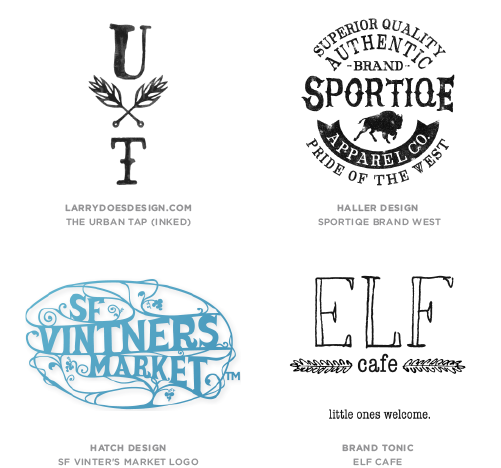
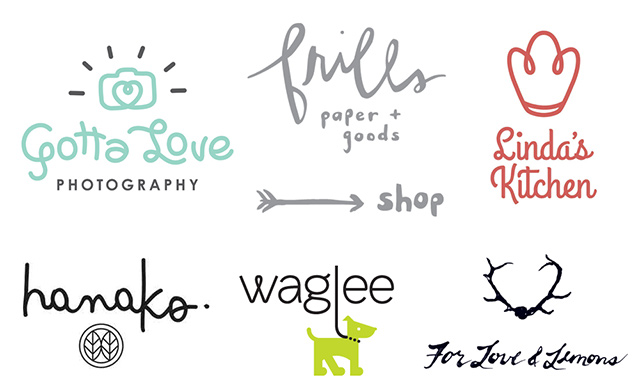
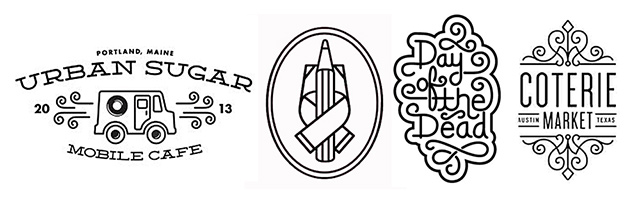
Logo Design Trends 2016 Prediction : Handmade

Handmade logos speak of personality. They convey intimacy and personality. This trend has been slowly gaining ground for a while now. A small sketch of an arrow, or scribbled letters prominently combined with some other elements have been evident in a growing number of businesses logos. Some look like “hybrids.” They’re the ones that don’t look “truly” handmade but they don’t feel digital either. Such designs suggest the idea of being handmade and they register the same charm, though not on the same level.

Handmade Logos

Handmade elements and font sets, or a suggestion of such, will be more evident in logo design as the year progresses. Bespoke font sets will be a valuable design asset.

It is important to emphasize that typography is no longer just the style of text you add to the design to spell out something. It is, and will always be, a great contributor to communicating the brand’s personality.

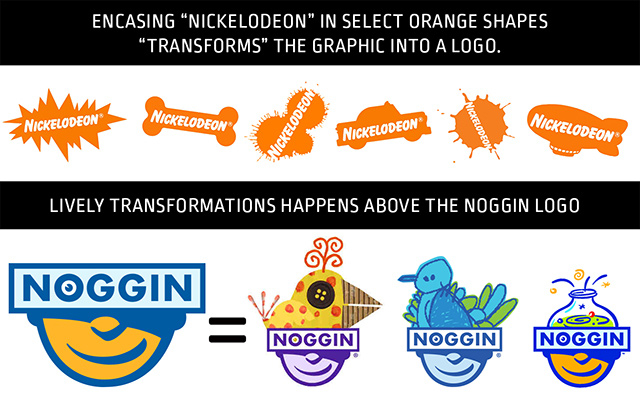
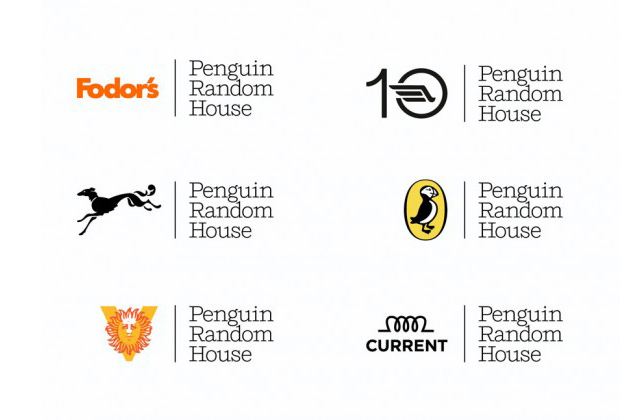
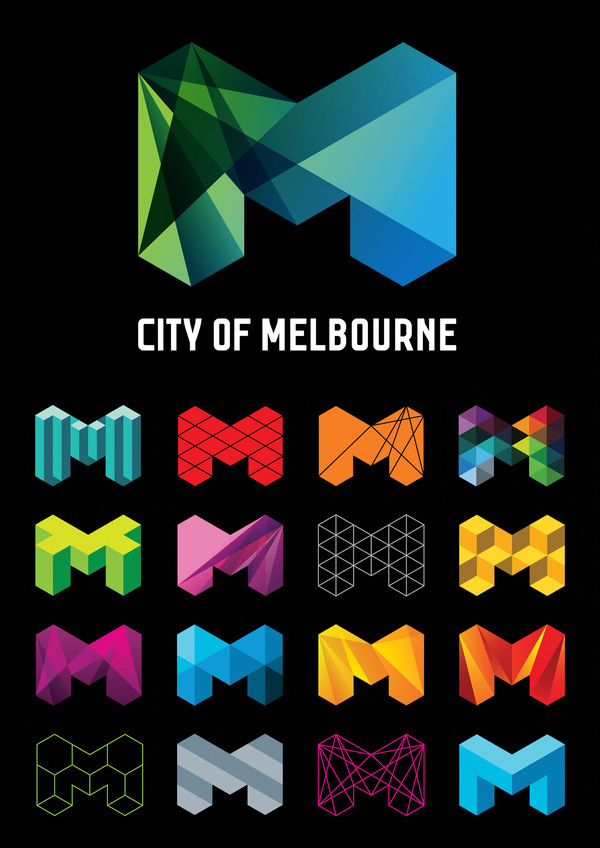
Logo Design Trends 2016 Prediction : Kinetic Logos

Kinetic logos that change but remain the same will find greater appeal. Perhaps because this particular style offers freshness, or it could be because the decision of what is attractive becomes even more appealing, while the need to connect to as many people as possible becomes the main focus.

Dynamic LogosPenguin Random House
City of Melbourne Logo Variations

These types of logos have the ability to make the consumer unconsciously aware of the diversification the company and brand is pursuing in real-time. The danger lies when the “kinetic” change does not rhyme with the core values the company has effectively communicated and has established for itself.

For example think of the regular changes in the Google Doodle, you get the idea of how this growing trend both excites the consumer and answers the need to present something fresh on a regular basis.

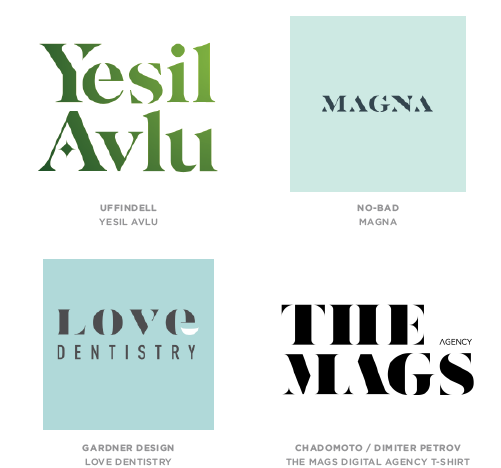
Logo Design Trends 2016 Prediction : Negative Space

Negative space will ALWAYS continue to amaze me. A design is something you see first, but then it speaks to you, and then you understand what it is saying. That is what makes design work. If it is able to convey more than this, and the consumer is able to pick up on a deeper message, it becomes something special. This is why negative space will continue to make many designers explore its strengths.

Negative Space Logos

The ability to communicate more to the consumer without adding extra elements is always a challenge to any designer. To the public, it’s like a welcome visual “egg hunt.”

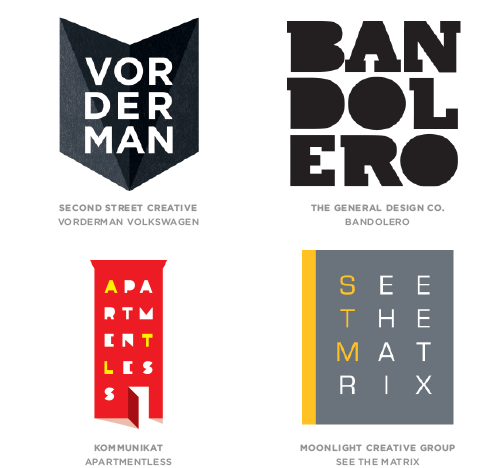
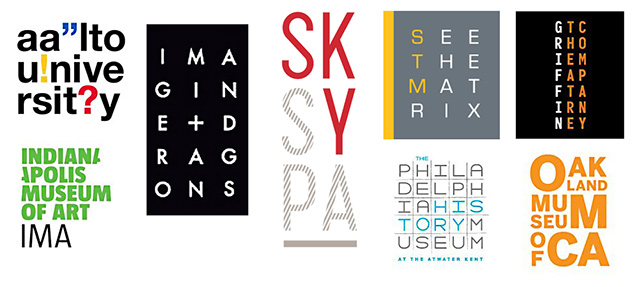
Logo Design Trends 2016 Prediction : Letterstacking

Letterstacking is continuing to hold ground. This trend has been around for a while and it’s not losing popularity. We think it because it draws in the consumer and challenges them to make sense out of it.

Letterstacking Logos

Our tendency to break down things and discover how we can rearrange them better is not the reason for this continuing trend. We think it may be because it offers a creative solution for logo designers to be able to communicate long “text” in visual bytes. It offers them a creative way to break down long messages. Whatever the reason may be, the style seems to work and has gained a foothold in logo design.

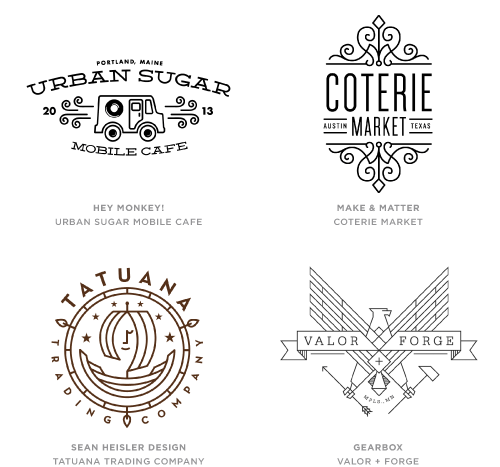
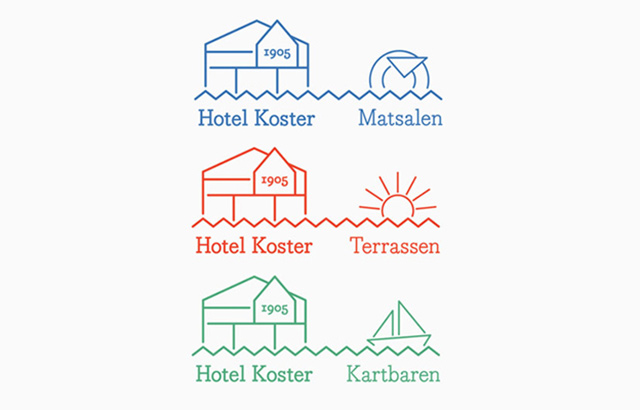
Logo Design Trends 2016 Prediction : Mono Lines

Thin Lines/Mono will present itself as “the new fresh, clean look”. This is the use of a line, unchanging in thickness, to design and compose the entire logo in something akin to “wire”. At first glance, this logo design style seems to run against the idea of simplification because of the intricacy of the execution.

Monoweight Logos

It will result in an appreciation of the ability to present something cleaner and clearer, with a hint of craft (handmade). This makes it more in line with the above mentioned forecasts rather than against them.

Monoweight Logos

The clean thin lines do strike you with an “honesty” so to speak, that is quite refreshing. It presents a welcome from seeing so many gradients and colours in the last years. The use of thin lines, or lines with a consistent thickness in mono scripts, mono icons and mono crests, is a beautiful progression of just how strong this design trend has been growing over the few years.

In Conclusion

Trends are forever changing, so what it is now, does not necessarily mean it will be the same for years to come. One thing we all know, are trends come around full circle after many years. All the above design trends we mention are not new ones, they have been around for years, but are now popular this year. One thing which is always constant in logo design….simplicity. All the above trends have this in them, which for designers is a blessing.

January 5, 2016 admin Logo design Comments Off on Logo Design Trends 2016

The best logo designs of 2015

The best logo designs of 2015

It’s that time of year when we review the most impactful logo designs and redesigns we believe have had the biggest impact.

When a new logo design is launched for a familiar brand, usually first reactions are overwhelmingly negative. And then once time has passed and the new design has entered daily use, it can be a different story.

So lets take a look back at the biggest brands to release a new logo in 2015. Now that you’ve got used to them, what do you really think of them?

01. GoogleGoogle has had a bottom-up rebrand, and it’s provoked plenty of opinion

It comes as no surprise that Google’s redesigned logo caused a stir when it launched in September. When you are the world’s most popular website, everything you do is going to be criticised by everyone.

The online giant’s new logo represents the biggest rebrand since 1999, when the search engine had nestled on the thin flowing letters that everyone now associates with internet giant.

Now with flat shapes and sharp colours, Google works better across a multitude of platforms, most notably the new ‘G’ logo which brings together all of the colourways. The company’s playful attitude is also hinted at in the cheeky slanting ‘e’.

02. Verizon

This new logo has caused instant controversy, but why?

At the same time Google revamped its logo, America’s largest telecommunications provider Verizon revamped their signature word mark design. But where Google’s simplicity was welcomed, Verizon seemed to take it too far.

The new logo was purposely designed to not be flashy or showy, which we think it isn’t. While ‘less is more’ is  what every designer believes, the simple type and a timid red tick annoyed a lot.

However, if their aim was to become an easily adaptable, ubiquitous part of American life, Verizon have improved on their previous design.

The old logo

With its gradient shading, irregular shape and highlighted ‘z’, the old Verizon logo seemed like it was trying to do too much at once. Perhaps its time they settled down with this more sensible design.

03. Hillary Clinton

Hillary Clintons logo had a massive social media response.

Hillary Clinton declared she would run for US President. What was more surprising, was the logo she released with her announcement.

Created by Pentagram, the new design set social media frenzy, with commentors pointing to the logo’s similarity to both the WikiLeaks logo and a hospital sign; the irony of the arrow pointing to the right; and their even was some bad-taste jokes about the Twin Towers.

Lots of graphic designers joined in on the fun, coming up with their own designs for the Hillary logo.

04. Facebook

This is the new Facebook logo: a subtle and distinctive change

At the start of the year came the latest update to the Facebook logo – a subtle tweak of its iconic typeface Klavika.

Users will be familiar with the social media platform rolling out new logo redesigns. This was the first time the company had changed its logo typeface since it launched as ‘Thefacebook’ way back in 2004.

Old logo – can you spot the difference?

The new typeface was a collaborative effort between Facebook’s own in-house design team and Process Type Foundry’s Eric Olson.

Facebook logo Tweet
The new logo was revealed in a Tweet (a new way of revealing news is now though social media)

The obvious change to the font includes a single-deck a and a more organic stem on the letter ‘b’, while the important ‘f’ remains instantly recognisable.

05. Royal Albert Hall

The Royal Albert Hall’s logo is very different

The famous London performing arts centre had a communications overhaul at the start of the year, it was in a bid to appeal to a wider audience and the logo change was part of its new strategy.

The Royal Albert Hall worked with strategy consultancy firm BrandPie‘s charity arm and the purpose of the new logo was to emphasise the reputation as a world class venue.

The Hall’s distinctive silhouette is a main feature on the new logo which is designed for use across different media.
06. Daily Motion
Daily Motion goes for only typography in its latest rebrand

One of the biggest video platforms on the world wide web, having over 300 million viewers on its player and 30 billion video views worldwide per month, Dailymotion came up with this new logo in March, it said goodbye to its icon and opted instead for a simple logotype. It was created by London-based agency venturethree.

07. Electrolux

Electrolux logo
NEW LOGO: This font was created specially for the Electrolux logo

Electrolux has been the leader in home and professional appliances since the 190o’s. At the start of the year it unveiled a brand new logo (above) with an original font that’s only unique to Electrolux.

The logo was designed by Prophet who are based in London, who worked in close partnership with the Electrolux marketing team on the project.

“We set out to create a visual identity that would enable Electrolux to tell its story to the world in an appealing way,” says Hector Pottie, Associate Partner and Creative Director from Prophet, London.

OLD LOGO: The typeface was beginning to look a little dated


08. Lemark

NEW LOGO: this new logo is based on an camera aperture

Lexmark, the well-known global manufacturer of laser printers, has unveiled a beautiful new logo (above) and branding.

When compared with Lexmark’s familiar red diamond motif (see below), the new green shutter logo was a huge change.

OLD LOGO: Lexmark is retiring its diamond design

The new design, it says, captures the company’s continuing evolution.

Danny Molhoek who is Managing Director at Lexmark, explains that the previous diamond shaped logo was intended to evoke clarity and durability.

By using a shutter, the new design is intended to suggest opening and expanding possibilities. It was created by Moving Brands.

09. Alitalia

NEW LOGO: Alitalia gets a more dynamic makeover

Italy’s airline received a new brand identity courtesy of Landor. The new logotype was given a more dynamic overhaul, keeping the green, red and white colours of the Italian flag, and a more prominent ‘A’ was created. It’s described as “a bold statement of the heights the airline is striving to reach and its enviable experience in the field of aviation”.

OLD LOGO: The previous logo was more upright

You can see this was inspired by Formula 1 racing cars, striations were added to the red triangular interior of the Alitalia ‘A’, creating a pinstripe effect designed to reflect exclusivity, attention to detail with a strong focus on design.

The aircraft fuselages are now painted in ivory to reflect of understated Italian style, reminiscent of both original and new Fiat colour ways, and progressively banded rearward to create an impression of movement, speed and progress.

A look at Italy’s flag-carrier with the all-new tail fin design

10. YouTube kids

A safe space for kids watching videos online

In February, YouTube launched a free app titled YouTube Kids for iOS and Android, described as “the first Google product built from the ground up with little ones in mind.”

Its logo was created by Hello Monday, who also designed the entire brand identity.

“The logo draws from the original aesthetics of YouTube, which is the parent brand,” they explained. “It’s fun, quirky and embodies the YouTube Kids brand.”

11. Andy Murray

This clever design combines ‘AM’ and ’77’

Andy Murray now has an official logo. It was designed by Aesop to create a uniform visual identity across of the tennis player’s commercial ventures, from endorsed products to his own branded products.

The logo combines Murray’s initials with the number 77, to celebrate his Wimbledon victory on the 7th day of the 7th month, a full 77 years since a British player had won the contest. Very clever.

What a year it has been both in graphic and logo design, like all things it continues to evolve. Can’t wait to see what 2016 has in store!

12. Freeview

The new logo is a vibrant and colourful

In February Freeview, which is now the UK’s most watched digital TV service, underwent a major rebrand, it was led by creative agency DixonBaxi. The move is part of Freeview’s strategic drive to bring connected television to a mass UK audience.

The old logo

The new logo retains the red heritage of the logo, but has been completely redesigned with added dimension – an angular form that suggests agility, choice and a sense of fun.

December 23, 2015 admin Logo design Comments Off on The best logo designs of 2015

Posts navigation

Previous 1 2 3 Next
Recent Posts
  • Content Relevance for SEO
  • Can you have too many backlinks?
  • Benefits of heat maps
  • The benefits of SEO in link building
  • Why are we addicted to social media?
Categories
  • Animated Video
  • Blogs
  • Brand Identity
  • Branding
  • Branding Adelaide
  • Budget
  • Business
  • Digital Design
  • Events
  • Future
  • General
  • Google
  • Google Plus
  • Graphic design
  • Graphic Design Adelaide
  • Identity
  • Illustration
  • IT
  • Logo design
  • News
  • Online security
  • Photography
  • Podcasts
  • Print Advertising
  • Psychology
  • Science
  • SEO
  • Signage
  • Social Media
  • Tips & Tricks
  • Typography
  • Uncategorized
  • UX
  • Video
  • Video Production
  • Web
  • Web design
  • WordPress
Who are we

We work with every one of our clients to develop and grow new and inspiring brands and refresh existing ones. Creating unique and individual visual identity. We hope that fresh approach to each client’s needs is demonstrated here in this showcase of our graphic design work.

CONTACT US

Suite 4a/134a The Parade
Norwood SA 5067
Australia

Phone: [+61] 0431 926 575
E-Mail: info@designab.net.au
Web: designlab.net.au

ADDITIONAL LINKS

About Us
You’re In Good Hands
Services
Terms and conditions

Copyright. All rights reserved.